How to Write a Perfect Resume for Freshers in 2026
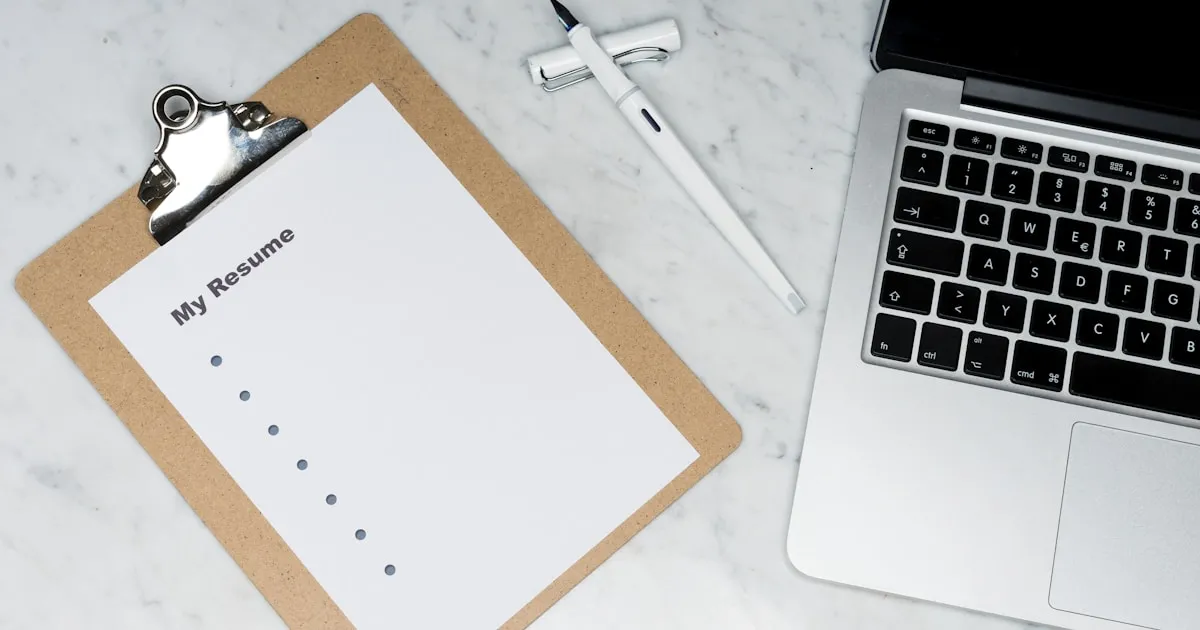
How to Write a Resume for Freshers in 2026
By Rajesh Kumar
“How long does a recruiter actually spend looking at my resume?” That’s usually the first thing freshers want to know, and the honest answer rattles them a bit. It’s seconds. Not minutes. A few seconds of someone half-skimming while three other tabs are open. Whatever you think your resume is doing for you, it’s getting maybe a quick glance before someone decides to either look closer or flick to the next file in the folder.
That single fact changes how the whole document should be built. A fresher resume isn’t a ledger of everything you’ve done since school. It’s a short pitch that has to survive a glance, and then survive a slightly longer read, and then survive a software filter that might toss it before any person sees it at all. Most fresher resumes in India fail at one of those three steps without the candidate ever knowing which one. They just hear silence.
So this is less a list of rules and more a walk through where resumes go wrong and what to do instead. My advice holds whether you’re heading into campus placements, applying off-campus through Naukri or LinkedIn, or sending a cold mail to some startup you stumbled onto. Whatever the channel, the format that works is roughly the same everywhere. What changes is the content you pour into it.
the problem nobody warns freshers about
Plenty of freshers treat the resume as a formality, something you put together the night before a drive because the placement cell asked for it. The thinking goes: skills toh interview mein dikha denge, we’ll show what we can do once we’re in the room. That logic skips a step. You have to get into the room first, and the resume is the door. If it doesn’t open, your skills never get a turn.
Two things stand between your resume and a human recruiter. The first is volume. For a single opening in a campus drive you might be one of a couple hundred applicants, and off-campus the pile is far deeper. Nobody is reading two hundred resumes word for word. They’re sorting fast, looking for reasons to say no, because saying no is how you get the stack down to a manageable handful.
The second thing is the software, which most freshers don’t even know exists. A lot of resumes now get filtered by an Applicant Tracking System (an ATS) before a person ever opens them. Software scans your file, looks for the right words and a format it can read, and quietly drops the ones it can’t make sense of. You can be the strongest candidate in the batch and still get cut at this stage, not because you weren’t good enough, but because your beautifully designed two-column template confused a parser. I’ll come back to ATS later because it’s the part people most often get wrong. For now just hold onto the idea that a robot reads you first.
Once you accept all that, the job of the resume gets clearer. Every line has to earn its place. If a line doesn’t help make the case for why someone should talk to you, it’s taking up room that a better line could use. That’s the lens. Hold it over every section and a lot of decisions get easy.
contact details, where freshers lose points before they even start
You’d think the contact block is the part nobody could mess up. Name, number, email, done. It’s quietly where a surprising number of freshers leak credibility in the first two lines.
Use your real name, the one on your official documents, not a nickname. If you’re R.K. Sharma on the resume but Rajendra Kumar Sharma on every certificate and ID, you’ve created a small mismatch that someone in HR will eventually have to reconcile, and small friction is exactly what you don’t want. One phone number, an active one you’ll actually pick up. Add the +91 if you might be dealing with recruiters outside India.
The email is where it gets a little painful. So many freshers carry an address they made in school and never thought about again, something like coolcoder_99 or a gamer tag, and they put it on a document meant to get them hired. It reads as careless even when the person isn’t. Fixing it costs nothing: make a clean address that’s some version of your name and use that for everything job-related. A solid candidate with a juvenile email gets quietly downgraded, and the worst part is they never find out that’s why.
Beyond that, a LinkedIn URL is more or less expected these days, and if you’re in tech a GitHub link does real work (more on both later). For design roles, a Behance or Dribbble link instead. Your city and state are enough for location, since nobody’s posting you a letter. The full address with PIN code is just clutter.
A few things genuinely don’t belong on a fresher resume, and freshers keep adding them anyway, mostly out of habit copied from older templates. Date of birth, not needed at this stage. Father’s or mother’s name, this isn’t a government form. Marital status, religion, caste, all irrelevant and frankly a bit off-putting on a professional document. And please, never put your Aadhaar or passport number on a file you’re about to email to strangers, that’s a security problem, not a formatting one.
The photo question comes up constantly. Photo lagayein ya nahi? For most private sector jobs, leave it off unless the posting specifically asks. A handful of government roles and a few industries like hospitality do want one. When you’re unsure, skip it. Your resume should make its case on what you’ve done, and a passport snap in the corner adds nothing to that case.
the summary line, and the one sentence to never write
Right under your contact block sits a short summary of maybe two lines, sometimes three, and it carries more weight than its size suggests, because it’s the first real thing a recruiter reads after your name. Those few seconds of attention? A good chunk of them land here.
Here’s the single most common opening I see on fresher resumes, and it’s worth dissecting because it’s the precise opener to avoid. A bad version reads roughly like: “To obtain a challenging position in a reputed organization where I can apply my skills and contribute to the growth of the company while enhancing my knowledge.” Now compare that to a version that actually says something: “B.Tech CS graduate (2026) with working knowledge of Python, Java and React. Built a full-stack e-commerce project handling a thousand-plus product listings during coursework. Looking for a software development role.” Same length, roughly. That first one could be pasted onto literally any resume for any job at any company, which is exactly why it fails. Its rival tells a recruiter what you studied, what you can do, and what you’re after, all before they’ve decided if you’re worth a phone call.
That’s the whole trick with the summary. Be specific. Name the degree, name the skills, point at one project you’ve built or shipped. The generic objective line has been read ten thousand times by every recruiter alive and it slides right off them. A concrete version sticks for a second longer, and a second longer is sometimes all you need.
Granted, you can’t put numbers on everything as a fresher, and you shouldn’t force it. If a project genuinely handled a certain scale or your internship moved a real metric, say so. When it didn’t, describe what you genuinely did plainly. Inventing a tidy figure to look impressive is the fastest way to get caught in the interview, and it’s not worth it.
education, presented without padding
For freshers this is usually one of the stronger sections, since the work history is thin by definition. List it in reverse chronological order, most recent first, which is the standard everywhere and the order an ATS expects. Each entry needs the degree and specialization, the institution, the year (or expected year), and the score if it helps you.
Keep the formatting plain and consistent. Degree, college, year, score, stacked cleanly, the same way for every entry. Don’t dress your tenth and twelfth standard results up with the same prominence as your degree, they’re supporting detail now, not the headline.
The CGPA question is the one I get asked most. Mera CGPA kam hai, likhna chahiye kya? My honest take, which I’ll hedge slightly because companies differ: if your score is comfortably above 70 percent or a 7-plus CGPA, put it in, it lends credibility. In the middle band, include it but make sure the rest of the resume carries weight on its own through your skills and projects and whatever certifications you’ve earned. If it’s low, you have a real choice, and it’s not as simple as hiding it. Some companies have cutoffs and will ask for the number anyway, and a blank where the score should be is itself a flag during the interview. Hiding a low CGPA isn’t the solution. Building enough around it that the number stops being the headline, that’s the solution.
I’ve seen plenty of aspirants with middling scores out-place classmates who had a point or two more CGPA but nothing else to show. The ones who spent their later college years actually building things (a few real projects, some open-source contributions, a cloud certification that meant something) often ended up with offers that the higher-CGPA-empty-resume crowd didn’t get. Scores open some doors. What you can demonstrate opens the rest.
skills, where most fresher resumes quietly go wrong
With limited work history, the skills section is where you make your case, and it’s also where freshers undermine themselves the most. The instinct is to list everything, twenty-five or thirty items, and somewhere in there sits “MS Word” and “internet browsing” as if those are achievements. In 2026, listing Word as a skill reads like listing the ability to use a phone. It’s assumed. It takes up a line and gives nothing back.
There’s also a quieter danger, which is listing things you barely know. Whatever you put down, you can be asked about. I’ve watched a candidate list machine learning on the strength of a few YouTube videos, then sit blank when the interviewer asked for the difference between supervised and unsupervised learning. That’s an avoidable kind of embarrassment, and it costs you the room’s trust for the rest of the conversation.
A better approach is to group skills into a few sensible buckets and only list what you can defend out loud. So a tech resume might split into programming languages, web technologies, databases and tools, with a few of them tagged by honest proficiency: Python (proficient), Java (intermediate), and so on. Over on the commerce or management side, a resume might break into technical tools like Tally and Excel, then financial skills like GST filing and statement analysis, then whatever software you lean on daily. Categories matter less than the honesty inside them. Recruiters trust “Python proficient, Java intermediate” far more than a flat list of ten languages that all turn out to be shaky under one question.
Soft skills deserve their own warning. Nearly every fresher resume recites the same four words, communication, leadership, teamwork, problem-solving, and those words have been repeated into meaninglessness. Nobody reads “leadership skills” and believes anything specific. If you want soft skills to land, attach evidence and let the proof carry the claim. Instead of writing “leadership,” write that you led a team of eight for the college tech fest and managed a budget of fifty thousand rupees. Rather than “communication,” write that you anchored five college events for audiences of a couple hundred. Demonstrate the trait, don’t merely label it.
projects, the part that does the heavy lifting
If you’ve no real work experience yet, projects are the closest stand-in, and a well-written project section can pull you into an interview on its own. The problem is that most freshers describe projects in a single throwaway line. “Made a food ordering website using React and Node.” That tells a recruiter almost nothing, and it sounds exactly like every other one-line project on every other resume.
Give each project a little room. A title, a one-line description of what it does, the technologies behind it, what you specifically built (this matters most for group projects, where everyone claims to have done everything), and a result if there’s an honest one to give. Throw in a GitHub or live link if you have one. So instead of the one-liner above, you’d lay out a food ordering system, note that you built the front end in React with responsive layouts, that you wired in a payment gateway, handled authentication, and link the repo. Same project. One version gets skimmed past, the other gets a recruiter wondering whether to call you.
A couple of solid projects beat a long list of shallow ones. And try not to hand in the same tutorial project everyone else does, the to-do app or the basic clone that recruiters at tech companies have seen a thousand times over. Following a tutorial to learn is completely fine, that’s how most of us start. But then build something of your own on top of what you learned, add a feature, solve a small real problem. Some plain project you can talk about with genuine feeling (why you built it, what broke, how you fixed it) beats a flashy one you can’t explain. The talking-about-it part is half the value. Anything you understand deeply is worth more in an interview than a sprawling clone you copied.
internships and the no-internship problem
If you’ve done internships, part-time work, or freelance gigs, write them up like a professional would. Role, organization, dates, then a few bullets, and start each bullet with an action verb. Managed, built, analyzed, coordinated. Quantify where it’s true (“managed three social accounts with ten thousand combined followers” beats “handled social media”), and lean on results over a flat list of duties. “Increased engagement” reads stronger than “was responsible for engagement,” and it’s usually the same fact stated with more spine.
One principle here matters more than polish, and that’s honesty about scope. If you were an intern who mostly observed and did small tasks, describe those small tasks well. Don’t inflate yourself into someone who ran a department. The exaggeration reads as insecurity, and it crumbles the moment an interviewer asks a follow-up question.
Plenty of freshers have no internship at all, often through no fault of their own, since not every college or town hands out those opportunities evenly. That’s fine, and it’s more common than the placement brochures suggest. When there’s no internship to show, the weight shifts onto everything else: academic projects, any freelance work however small, committee roles and event management, volunteer work, and the certifications you’ve genuinely completed. I’ve seen freshers with zero internships stand out purely on self-initiative, a stack of finished online courses, a few personal projects, real activity on something like Stack Overflow. The internship stamp is nice. It isn’t the only proof of effort, and a sharp recruiter knows that.
certifications, and the ones that don’t count
Online certifications carry actual weight now, with a caveat: only the relevant ones from places that mean something. Cloud certifications from AWS, Azure, or GCP tend to land well. Google’s career certificates in areas like data analytics or project management hold up. Coursera or edX courses from recognized universities, NPTEL certificates with IIT or IISc names behind them, and domain-specific ones like a CFA level or a Scrum certification for the right role, all fine.
What doesn’t help, and sometimes actively hurts, is the padding: certificates from platforms nobody’s heard of with no real assessment behind them, participation slips from webinars you half-watched, a scatter of courses across completely unrelated fields that just signals you haven’t decided what you want. Three to five relevant, credible certifications do more than fifteen random ones. A recruiter who spots a recognized cloud certification takes it seriously. Walls of unknown badges mostly make them stop reading.
extracurriculars, achievements, plus that line about references
This section earns its keep more than freshers expect, because it shows there’s a person behind the marks. Committee roles, hackathon wins, paper presentations, real state or national achievements, volunteer work where you can describe your actual contribution, anything you’ve published. The pattern is the same as everywhere else on the page: specifics beat vague membership. “Organized a three-day national hackathon with five hundred-plus participants and managed sponsorships as technical committee head” does work. “Member of the coding club” does not. Leave out the things that don’t clear that bar, the passive memberships and the school-level prizes that stopped mattering once you graduated.
While we’re trimming, kill the line “references available on request” if it’s hiding at the bottom of your resume. It’s a leftover from an older era and it does nothing, since every recruiter already knows they can ask for references when they need them. The space it wastes could hold one more project line or a certification. Every line earns its place, and that one doesn’t.
the ATS, the reader you never see
Now back to the software, because this is the part that quietly costs Indian freshers the most interviews. When you apply through Naukri or LinkedIn or straight through a company’s careers page, your file usually lands in an Applicant Tracking System first. It scans the document, looks for relevant keywords and qualifications, and effectively scores you. Only the resumes that clear some threshold get forwarded to a human. The rest get filtered out automatically, no person involved.
Big employers run these systems, the large IT services firms and most of the well-known names hiring at scale, and plenty of mid-size companies have adopted them too. So an ATS-unfriendly resume can be a dead end no matter how qualified you are, because a person never sees it to judge.
Making a resume ATS-readable is mostly about keeping it plain, and the irony is that “plain” runs against every instinct that says a resume should look impressive. Build it on a simple single-column layout with no graphics, images, text boxes or multi-column designs, because parsers often choke on those. Those gorgeous Canva templates with the sidebar and the skill-bars look great on a screen and frequently come out as scrambled nonsense on the other side of an ATS. Stick to standard section headings, “Education” and “Work Experience,” not “My Academic Journey” or “Where I’ve Worked,” since the software is literally looking for the standard words. Pull keywords from the job description itself; if the posting says Python and SQL, those exact words should appear in your resume, because the machine matches on them. A normal font like Arial or Calibri or Times New Roman is safest. Keep important details out of the header and footer area, which a lot of systems skip entirely. Plain round or square bullets work; arrows and stars don’t. And save as PDF or DOCX, checking the posting in case it asks for one specifically.
The reality freshers find hardest to swallow is that the simpler resume usually wins online. Put two near-identical candidates side by side, one with a designed, graphic-heavy file and one with a clean text-based file, and through online applications the plain one tends to draw more calls, sometimes by a wide margin. Yes, the fancy one photographs beautifully. An ATS just can’t read half of it.
the mistakes that show up again and again
A few errors repeat across fresher resumes so often they’re almost a genre. The length one is everywhere: a fresher resume should be a single page, full stop. If experienced people fit their careers onto a page or two, a fresher has no business stretching to four or seven. Everything past page one is usually padding, and padding reads as not knowing what matters.
Then there’s the proofreading failure, which is more damaging than it sounds because it signals carelessness on a document that’s supposed to be your most careful work. The classic version is leftover text from a copied template, a line about a completely different field that someone forgot to delete, sitting there on an application for an unrelated job. Read your resume aloud before sending. Go backwards through it too, sentence by sentence, so your eye stops auto-correcting. Hand it to a friend. Run it through a checker. Whatever it takes, because a typo here does outsized harm.
The one-resume-for-everything habit is another big one. Sending the identical file to every opening feels efficient and quietly costs you interviews. A Python developer application and a data analyst application should foreground different skills and different projects, even if they draw from the same underlying experience. Tailoring takes maybe fifteen or twenty minutes per application, and that’s often the gap between a callback and silence.
Lying can end a career before it even starts, so be clear with yourself about the line. Claiming years of experience in something you touched for a semester, listing a language as fluent when you can barely manage a greeting, inflating a small role into leadership of a team, these embellishments get exposed the moment someone who actually knows the subject starts probing. There’s a difference between presenting your real work in its best light, which is the whole point of a resume, and claiming credentials that aren’t true. Stay on the right side of that line.
The smaller stuff matters too. Inconsistent formatting (three fonts, bullets that switch between circles and dashes, random bold text) reads as inattention to detail, which is a poor trait to advertise. Pick one font, one bullet style, one date format, and hold it across the whole page. And the hobbies section, if you keep it at all, shouldn’t list “watching Netflix” or “sleeping.” Either tie a hobby to something purposeful (writing a tech blog, playing chess competitively, anything that hints at how you think) or scrap the section. It’s optional for freshers, and a weak one is worse than none.
format and order, plus where to find a decent template
The layout that works for most Indian freshers right now is a clean single-column page in a fairly standard order: name and contact at the top, then a short summary, then education, skills, projects, any internships or work, your certifications, with extracurriculars to close. That order isn’t sacred. If your strongest card is a genuinely good internship, move it up so the recruiter hits it early. My rule of thumb is just to lead with your best material, because attention drops off fast and you want your strongest thing read while you still have it.
For templates, a few honest options exist without paying anyone. Overleaf has clean, ATS-safe resume templates if you’re comfortable with LaTeX, which is why a lot of engineering students gravitate to it. Google Docs has free templates in its gallery that are simple and parse fine. Novoresume offers a usable free tier. And Canva is fine as long as you stick strictly to its plainest templates and stay away from the graphic-heavy ones that look great and break ATS parsing. The tool matters less than the discipline of keeping it readable by a machine.
a quick word on LinkedIn and cover letters
Your LinkedIn profile does real work alongside the resume now, because recruiters in India increasingly search there before a role is even posted publicly. An incomplete or sloppy profile means you simply don’t surface in those searches. The basics cover most of the value: a clear headshot against a plain background, a headline that says something beyond “Student at XYZ College” (your field, what you do, that you’re open to work), an About section that reads like a slightly longer summary in your own voice, and a complete experience section with your internships and projects filled in. Add your skills, ask classmates and professors for endorsements, gather a couple of genuine recommendations if you can, turn on the “open to work” setting, and connect with a bit of intent toward recruiters and alumni rather than at random. One underused feature: the “Featured” section near the top, where you can pin your best project or a portfolio link so it’s among the first items a visitor sees.
Cover letters come up a lot too. Sir, cover letter zaruri hai kya? It depends. When the posting asks for one, it’s mandatory and that settles it. Where it doesn’t, a well-written one can still give you an edge, though a weak one does nothing or worse. Structure stays short: an opening that names the role and shows you’ve actually looked at the company, a middle that points at a couple of specific wins from your projects or coursework that fit the job, and a close that’s brief and forward-looking. One rule matters above the rest, that a cover letter shouldn’t just restate the resume. Let it tell the small story behind the bullet points instead, why this role at this company, in a way they can’t. Keep the whole thing under a page.
different fields, slightly different emphasis
The skeleton stays the same across industries, but a few fields reward particular signals. In software roles, a GitHub link with live repositories does a lot, and naming the actual stack (“React with Redux”) beats naming the bare language; a competitive-programming profile on something like LeetCode or HackerRank helps if you have one. Banking and finance candidates should surface any CA or CFA progress, name the financial tools they know, and mention relevant NISM-type certifications since they show initiative. Marketing rewards anything measurable (follower growth, campaign numbers), so link writing samples or a portfolio. Over in the core engineering branches, list the right software (AutoCAD, SolidWorks, MATLAB and so on), describe industrial training in terms of what you genuinely absorbed, and put your GATE score and rank up if you’ve cleared it. Government applications want the opposite of flash: go traditional and plain, include full qualifications with exact percentages, mention cleared exams with scores, and follow whatever format the notification specifies if it specifies one.
the last check before you send
Before any application goes out, run a short pass over it, and make this a habit rather than a one-off. Proofread properly, the read-aloud, read-backwards, second-pair-of-eyes kind, not a casual skim. Check that the formatting is consistent end to end. Click every link to confirm it actually opens. Confirm it’s one page. Rename the file to something like FirstName_LastName_Resume.pdf, because recruiters download hundreds of these and “resume.pdf” or “final_v3_FINAL.docx” makes yours impossible to find later. Make sure the email on the resume matches the one you’re sending from, a mismatch that happens more than you’d guess. Strip out any leftover personal details that don’t belong. Double-check you’ve tailored this copy to this specific job. Then ask the one question that catches the rest: does every line here earn its place? If a line doesn’t help the case for interviewing you, cut it. Save as PDF so the formatting holds across whatever device opens it.
One more point worth saying plainly, since it gets left out of resume guides: even a strong resume gets rejected, often a lot, and the silence is the hard part. Most companies won’t send a no, they just won’t reply, and that quiet can feel personal when it usually isn’t. A rejection is mostly about fit between your profile and one role at one moment. The same profile can be exactly what a different team wants three months on. So the resume keeps getting updated and the applications keep going out, and you treat it as a numbers game with a learning curve rather than a verdict on you.
If you do only one thing after reading this, open your current resume right now and cut it to a single page, removing every line that doesn’t directly argue for why someone should interview you. That one edit, done honestly, fixes more than any template ever will.
– Rajesh Kumar

Rajesh Kumar
Senior Career Counselor
Rajesh Kumar is a career counselor and job market analyst with over 8 years of experience helping job seekers across India find meaningful employment. He writes JobWala24's in-depth guides on government exam preparation — UPSC, SSC, banking, railway, defence and state PCS — alongside practical advice on resumes, cover letters, interviews and group discussions for both freshers and experienced professionals. He also covers career transitions, salary negotiation, remote and freelance work, and government skilling and self-employment schemes such as PMKVY, Mudra and Startup India. His articles aim to turn official notifications and dense eligibility rules into clear, step-by-step plans that ordinary candidates can actually follow. Through JobWala24 he shares the preparation routines, document checklists and decision frameworks he has refined over years of one-to-one counseling.


Comments
Be the first to leave a comment on this article.